







The spin of a tennis string
- Monday 31 March 2025
- String characteristics
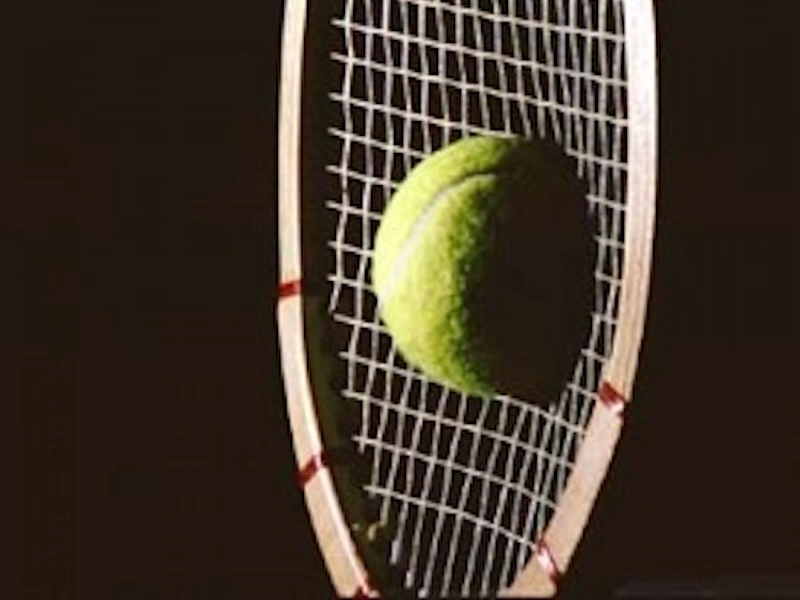
In modern tennis, spin is not generated by sharp edges, but by the mechanical behavior of the string. Snap-back, ball-pocketing, stiffness and friction are the real drivers behind rotation. Beyond marketing, there is engineering.
Read more
String Resilience
- Wednesday 26 March 2025
- String characteristics
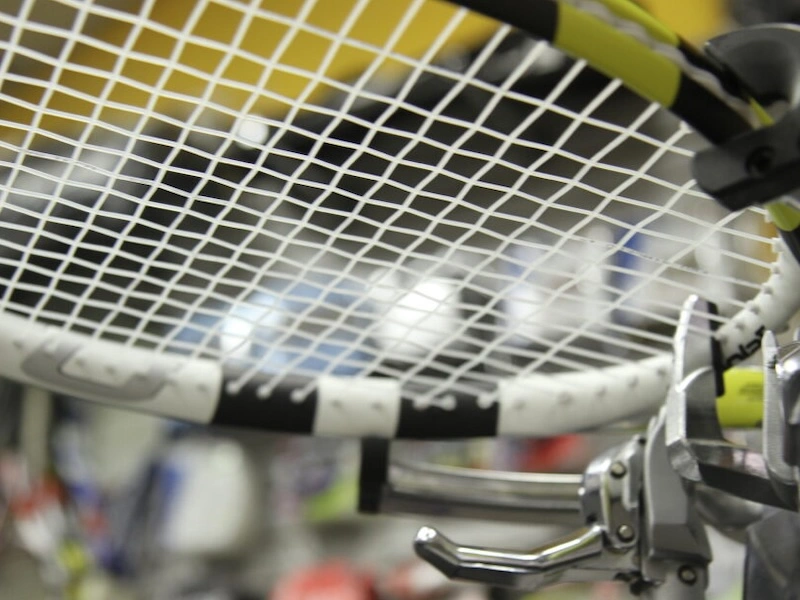
String resilience describes the ability of the material to deform on impact and quickly return energy. Higher resilience results in a more elastic, lively, and powerful response, while lower resilience provides a more controlled, progressive, and dampened feel.
Read more
Static Tension Stability in Tennis Strings
- Tuesday 18 March 2025
- String characteristics
Static tension stability describes how a string behaves in the first minutes after stringing, when most of the tension loss occurs. It is a key indicator, but not a final verdict, and must be read alongside dynamic stability and on-court feel.
Read more

The dynamic stability of a tennis string
- Wednesday 12 March 2025
- String characteristics
Dynamic stability describes how well a tennis string maintains its performance over time under real playing stress. Poor stability leads to rapid tension loss and unpredictable response, while good stability ensures consistency, control, and reliability shot after shot.
Read more

The control of a tennis string
- Monday 24 February 2025
- String characteristics
The control of a tennis string is a fundamental sensation for every player: the confidence to swing freely without losing precision, maintaining direction and depth on every shot.
Behind this perception lies a balance between string stiffness, stringing tension and how the string evolves over time. Understanding these elements helps players choose the right setup and turn control from a simple feeling into a true ally on court.
Read more
Behind this perception lies a balance between string stiffness, stringing tension and how the string evolves over time. Understanding these elements helps players choose the right setup and turn control from a simple feeling into a true ally on court.
The power of a tennis string
- Tuesday 18 February 2025
- String characteristics
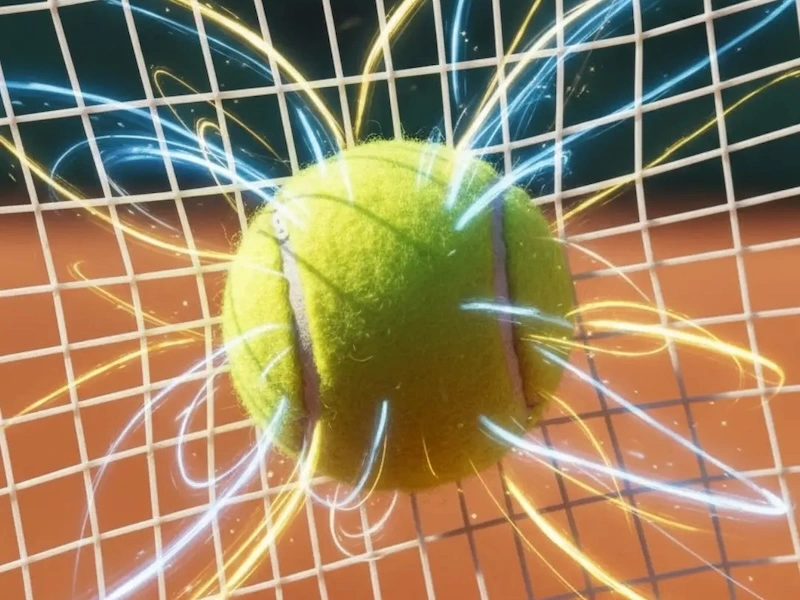
The power of a tennis string represents its ability to return energy to the ball during impact, directly influencing ball depth and the sense of propulsion perceived by the player.
A high-power string generates a more elastic and responsive reaction; a low-power string offers a more dampened response focused on control.
Read more
A high-power string generates a more elastic and responsive reaction; a low-power string offers a more dampened response focused on control.

Sergetti Stringing: Custom Stringing and Optimized Sweetspot
- Sunday 29 September 2024
- Stringing
Sergetti Stringing is a custom stringing system with string-by-string differentiated tensions, designed to improve stringbed uniformity, sweetspot size, comfort, and forgiveness on off-center hits.
Read more
Progressive Tension Stringing with Four Knots: Comfort and Sweetspot
- Tuesday 24 September 2024
- Stringing
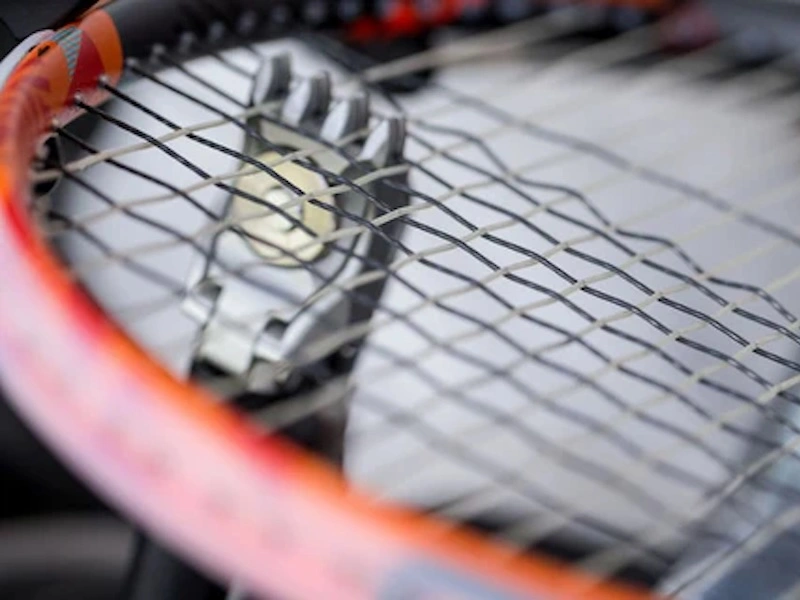
Progressive tension stringing with four knots is an advanced technique that enhances comfort, tolerance, and stringbed uniformity. By adjusting tension according to string length, it enlarges the sweetspot and improves overall frame playability.
Read more
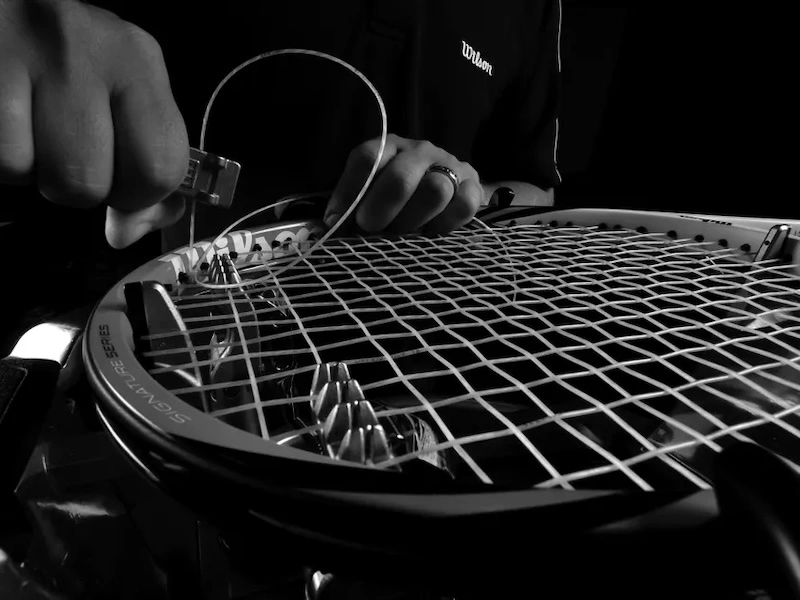
4-Knot Stringing with Differentiated Tensions: Benefits and Stringbed Performance
- Saturday 21 September 2024
- Stringing
4-knot stringing with differentiated tensions is an advanced setup designed to enhance comfort, forgiveness, and spin potential, optimizing stringbed performance without compromising frame safety.
Read more
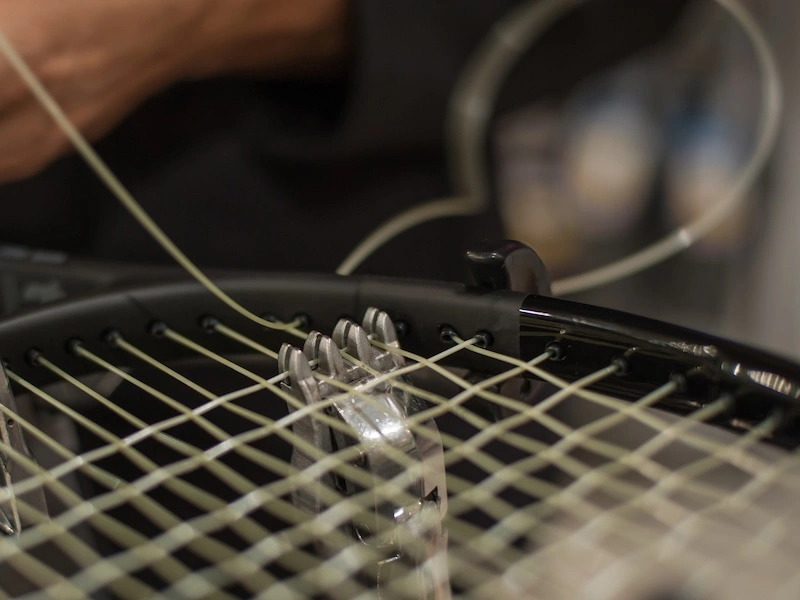
Uniform Four-Knot Stringing: Pros, Cons and Stringbed Behavior
- Sunday 1 September 2024
- Stringing
Uniform-tension four-knot stringing: how friction lowers effective tension on crosses and what that means for control, launch angle and feel. Pros, cons and ideal players.
Read more