







“More spin”, “more power”, “more control”: what do these claims really mean for tennis strings?
- Friday 16 October 2026
- String Characteristics, Stringing
“More spin”, “more power”, “more control”: marketing labels can help us navigate products, but they do not tell the whole story. Laboratory data lets us move beyond the claim.
Read more

How many hours should you play before changing your strings?
- Sunday 27 September 2026
- String Characteristics, Stringing
Strings can still be physically intact while having already lost an important part of their original characteristics. That is why useful life does not necessarily end when they break.
Read more
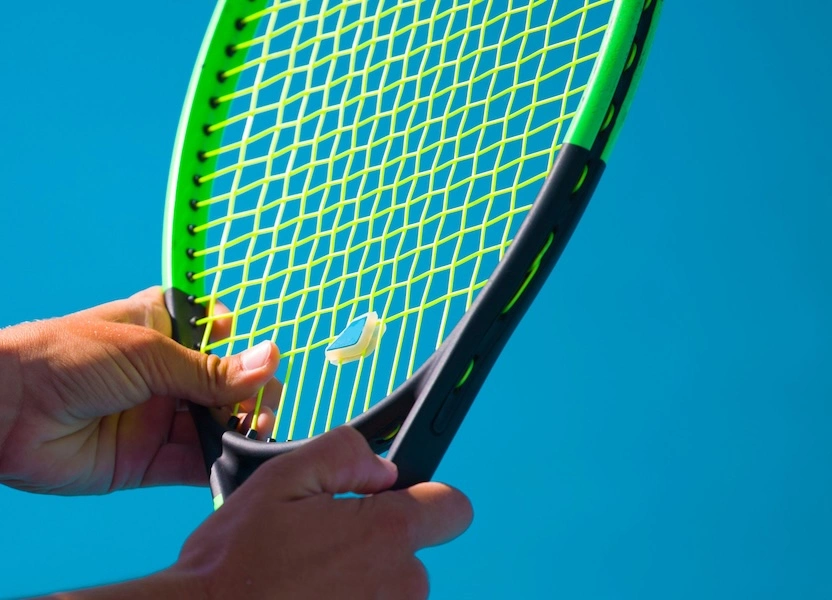
The ideal string tension does not exist: here’s why
- Monday 31 August 2026
- String characteristics, Stringing
22, 23 or 24 kg? Looking for one perfect number is the wrong approach. Tension only makes sense within a system made up of string, racket and player. Racketpedia Lab Tests and real Stringing Cloud data help put it into context.
Read more

Your setup can work better: meet RP TuneAI
- Monday 17 August 2026
- Racket Performance, String characteristics, Equipment Setup
RP TuneAI starts from the setup you play with today and what you want to improve. Racket, strings and tension are analysed together to identify the most sensible changes while preserving what already works.
Read more

Why Two Tennis Rackets with the Same Specifications Can Play Completely Differently
- Monday 10 August 2026
- Racket Performance
Published specifications are nominal values, while every racket is a real production sample subject to tolerances. This is why measuring a frame is more useful than simply reading a catalogue.
Read more
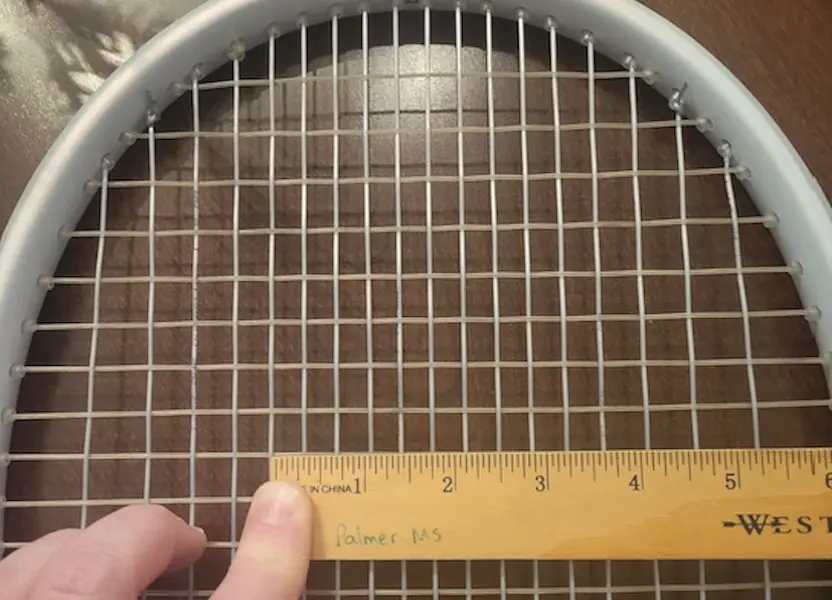
How to Read a Tennis Racket Specification Sheet: The Most Common Mistakes
- Monday 3 August 2026
- Racket Performance
A tennis racket cannot be described by a single number. Learn how to interpret weight, balance, inertia, stiffness and performance indicators together to choose the frame that best suits your game.
Read more

Ball exit and power: two different string responses
- Thursday 22 January 2026
- String characteristics
In modern tennis, ball exit and power are not the same.
Ball exit refers to how quickly the string responds, while power depends on how much energy the material can return. Understanding the difference leads to smarter string choices.
Read more

Static vs Dynamic Stiffness: What Really Changes in Tennis Strings
- Thursday 1 May 2025
- String characteristics
Static and dynamic stiffness describe two different aspects of how a tennis string behaves. Static stiffness defines the string’s structural resistance under tension, while dynamic stiffness determines how much shock is transmitted during ball impact. Understanding both is essential to balance performance, comfort, and arm safety. A string is never “soft” or “stiff” in absolute terms—tension and setup make the difference.
Read more
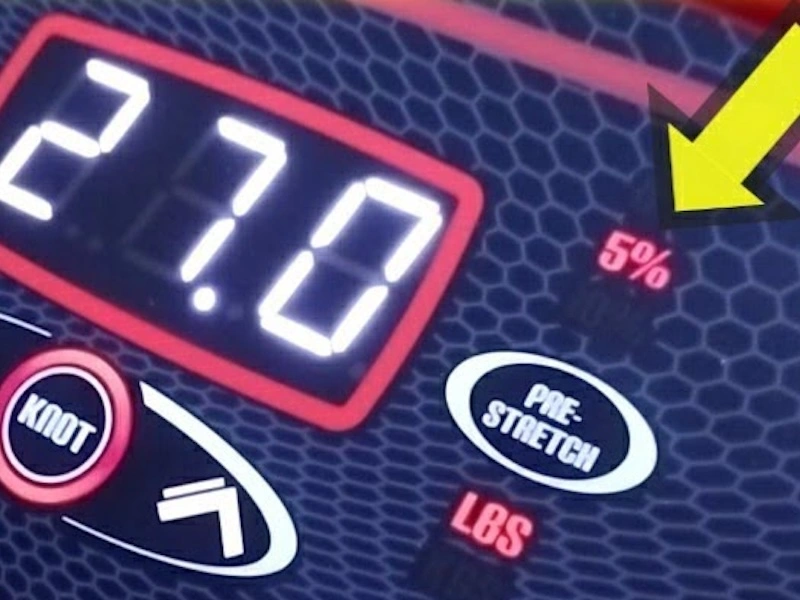
String Pre-Stretch: What It Is, Why It Matters and When to Use It
- Tuesday 29 April 2025
- String characteristics
Pre-stretch is a light preliminary tension applied to strings to improve tension stability over time. It reduces early tension loss but increases string stiffness. When used, stringing tension should be lowered accordingly. It is a useful tool when applied with awareness of its impact on feel and comfort.
Read more
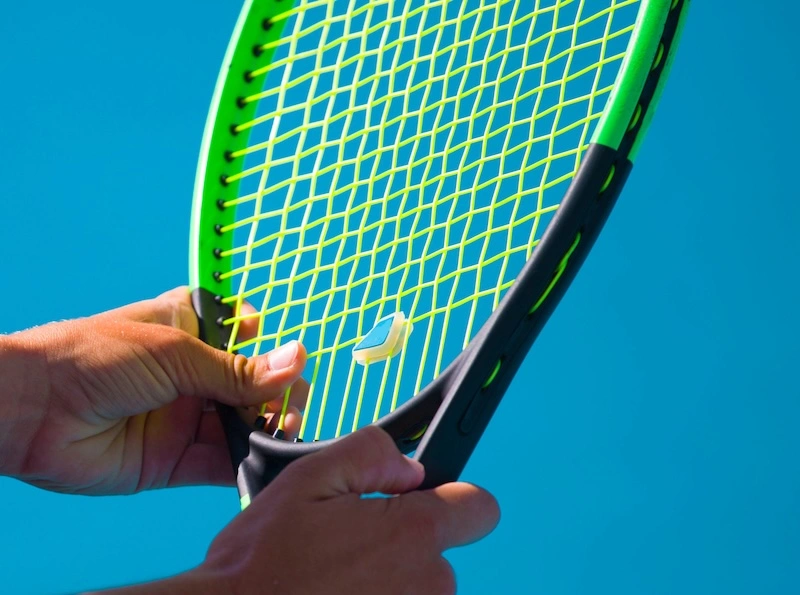
String Tension: How to Choose the Right Setup
- Tuesday 22 April 2025
- String characteristics
Choosing the right string tension has a direct impact on power, control, and overall feel.
Elastic strings and stiffer ones behave differently at ball impact,
and understanding these differences helps players fine-tune their setup for optimal performance.
Read more