






4-Knot Stringing with Differentiated Tensions: Benefits and Stringbed Performance
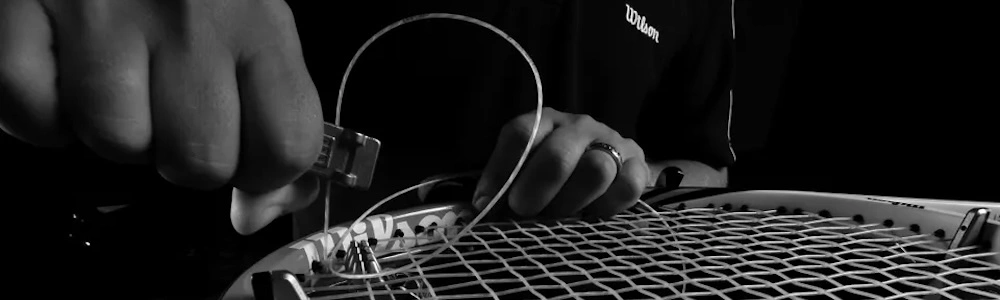
The 4-knot stringing pattern with differentiated tensions between mains and crosses is a widely used technical solution in modern tennis, especially among players looking for comfort, forgiveness, and easier access to spin.
This configuration involves a controlled tension difference between the main strings and the cross strings. It is generally recommended to keep this difference within 2 kg to reduce the risk of frame deformation and structural stress.
Compared to uniform-tension stringing, differentiated tension allows for a more targeted way to tune the stringbed behavior. The goal is to promote a larger sweetspot, greater ball pocketing at impact, and a more forgiving response on off-center hits, improving overall playability.
Slightly reducing cross-string tension relative to the mains results in a naturally softer stringbed, producing a more progressive impact feel and increased comfort during stroke execution.
One of the main reasons players choose this setup is its performance on topspin shots. Lower cross-string tension can help reduce inter-string friction, enhancing main-string snap-back and therefore increasing the ability to generate spin.
From a playing dynamics perspective, this setup also tends to produce easier power, with a slightly higher launch angle and a perceived increase in power compared to stiffer, uniform-tension setups.
In terms of stiffness distribution, differentiated tension can lead to a more uniform stringbed response: the upper part of the hoop generally remains more stable and controlled, while the central and lateral areas become more forgiving. The result is a balance between control on clean hits and better handling of off-center impacts.
- Advantages: increased comfort, larger sweetspot, improved access to spin, greater forgiveness, easier power.
- Disadvantages: slightly reduced absolute control compared to higher, uniform tensions; potentially shorter string durability, especially with monofilaments.
This configuration is particularly suitable for intermediate and advanced players, for those who use topspin strokes, and for players looking to customize their setup without changing frame or string type.
In summary, 4-knot stringing with differentiated tensions is an effective solution for achieving more comfort, more forgiveness, and more spin compared to a constant-tension setup, provided that safe tension differences are respected.
- By Gabriele Medri
- Saturday 21 September 2024
- Stringing