






Comece agora
Racketpedia é o único serviço que oferece uma classificação objetiva das cordas de tênis baseada exclusivamente em dados instrumentais objetivos.

 Dados dos jogadores
A rigidez estática média é igual a 1,05 kg/mm.
Informações gerais
Dados técnicos
Características
Rigidez
Tough
Dados dos jogadores Os dados baseiam-se em 33910 encordoamentos reais registados por uma rede de encordoadores profissionais que utilizam Stringing Cloud.





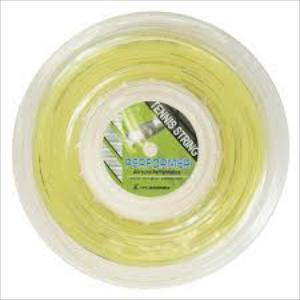
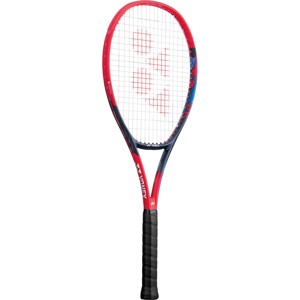
Cordas com comportamento semelhante



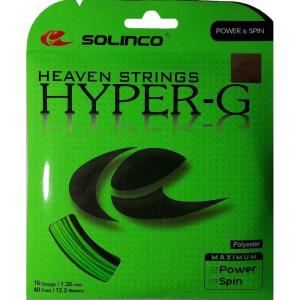





Cordas semelhantes por atributo












Progressive plasticization is a phenomenon that affects tennis strings over time, especially monofilament types. As the strings are used, they gradually lose elasticity, snapback, and responsiveness — negatively impacting racquet performance on the court.
🎾 What is progressive plasticization?
When hitting the ball, strings deform to absorb energy. In materials like polyester, part of that deformation becomes permanent. This gradual accumulation is known as progressive plasticization — where strings become stiffer, less elastic, and less comfortable with use.
📏 String types and susceptibility
| String Type | Plasticization Tendency |
|---|---|
| Monofilament polyester | 🔴 High – loses tension and snapback quickly |
| Multifilament or natural gut | 🟢 Low – maintains elasticity and feel longer |
| Hybrid (mono + multi) | 🟡 Medium – good balance between durability and resilience |
⚙️ Effects on play
- Tension loss: strings stretch and lose their original tension, reducing control.
- Stiffness and discomfort: more vibrations are transferred to the arm, increasing fatigue or risk of injury.
- Reduced snapback: the ball spends less time on the stringbed, lowering spin and consistency.
- “Dead string” feel: shots feel dull, with less power and feedback.
🎯 In practice
If you use polyester strings, it’s crucial to restring regularly — even before they break — to avoid plasticization effects. Players seeking more comfort or consistency can opt for multifilaments or hybrid setups. Be mindful that heat and long periods of inactivity can also accelerate the degradation of string performance.
Prestretching tennis strings is a technique used to reduce tension loss and improve stringbed stability. It involves stretching the string manually or mechanically before or during the stringing process. This is especially useful for polyester or stiff monofilament strings that tend to lose tension quickly.
🎾 What is prestretching?
Prestretching means applying extra tension to the string before it's installed in the racquet. This can be done manually by pulling the string and holding it for a few seconds, or automatically through a stringing machine with a prestretch function. The goal is to minimize the natural elongation that occurs during play, ensuring more consistent performance and reducing the break-in period.
📏 Types of prestretching
| Prestretch Method | Description |
|---|---|
| Manual prestretch | The string is pulled by hand before installation and held under tension for 5–10 seconds to reduce initial elasticity. |
| Automatic prestretch | Some electronic stringing machines apply about 10% extra tension for a few seconds before returning to the desired tension. |
| Constant-pull tensioning | Electronic machines maintain tension throughout the stringing process, effectively prestretching the string by default. |
⚙️ Effects on performance
- Reduces tension loss: Helps strings maintain their tension longer, especially in the early hours of play.
- Improves control: A more stable stringbed provides better feedback and precision.
- Less power, more feel: Prestretched strings tend to feel slightly stiffer but more accurate.
- Shorter break-in period: The racquet reaches its "true" feel more quickly after stringing.
🎯 In practice
Prestretching is especially recommended for polyester strings, which suffer from high initial tension loss. Players looking for consistency and durability often prefer prestretching. However, for natural gut or multifilament strings, it's usually avoided, as it may reduce comfort and increase the risk of breakage. Always consider your playing style, string type, and personal preference before deciding to prestretch.